All Chapters
00. Introduction to Fractals
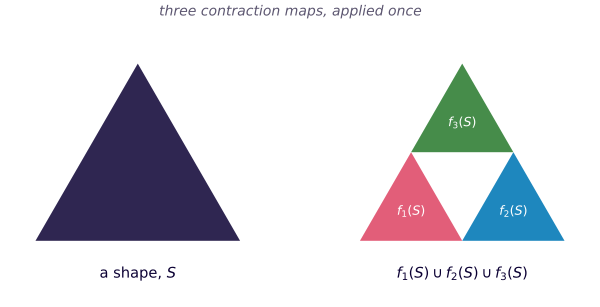
What fractals actually are, the century of mathematicians who discovered them piece by piece, and the three distinct mechanisms — IFS, L-systems, and escape-time iteration — every chapter that follows is built from.
01. Recursion & Self-Similarity
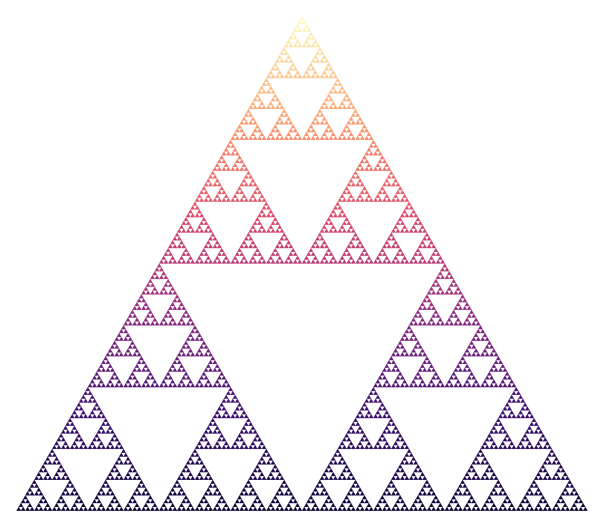
Before meeting the famous fractals, learn the two ideas that make most of them possible: repeat a rule, and watch structure reappear across scales.
02. Measuring the Unmeasurable
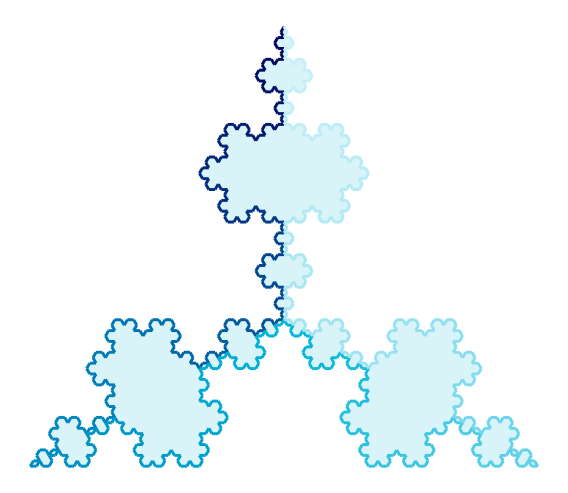
What could 1.585-dimensional possibly mean? Fractal dimension turns that apparently absurd question into a calculation.
03. The Cantor Set
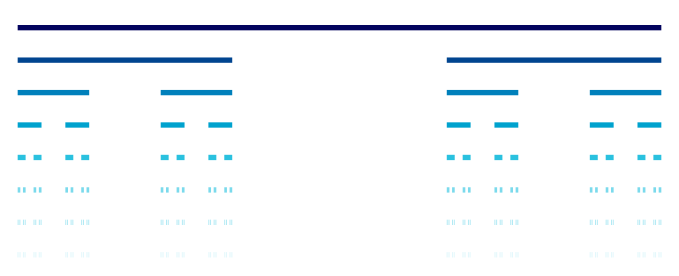
The simplest fractal in this book: remove the middle third, forever, and end up with a set that is simultaneously almost nothing and just as big as everything.
04. The Sierpinski Triangle
Two routes to the same triangle: a random walk that jumps toward a random vertex forever, or simply removing the middle triangle, recursively. The figure uses the second — true vector triangles, crisp at any zoom.
05. The Koch Snowflake
A curve of infinite length enclosing a finite area — one segment becomes four, forever.
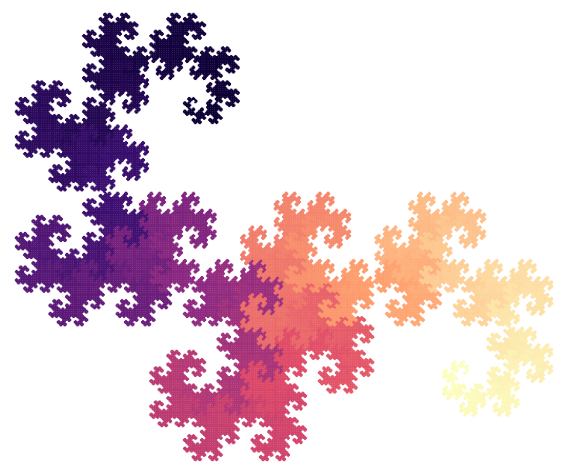
06. The Heighway Dragon Curve
Fold a strip of paper in half, again and again, then unfold every crease to a right angle — that's the whole construction.
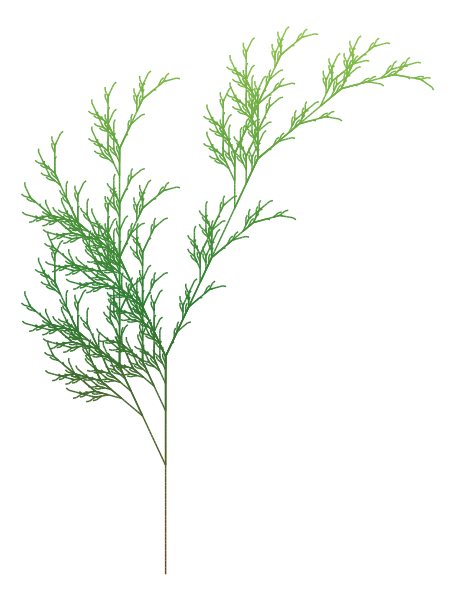
07. L-Systems: A Grammar for Growth
A biologist's model of algae growth turns out to be the cleanest possible generalisation of the Koch and dragon constructions.

08. The Barnsley Fern
Four affine maps and a handful of probabilities encode something that looks uncannily like a real frond.
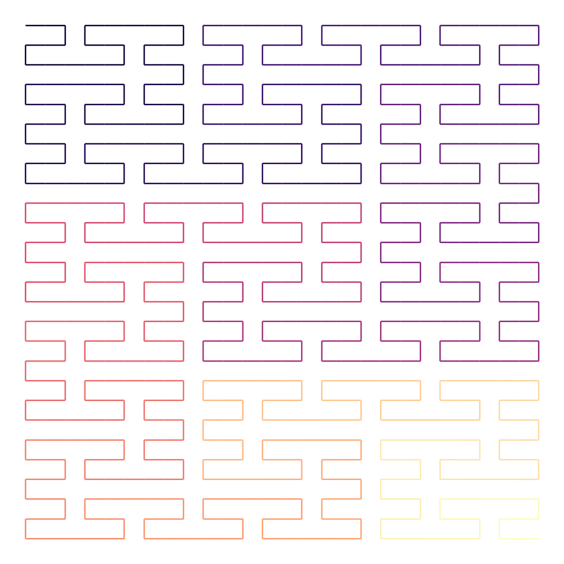
09. The Peano Curve
The first published space-filling curve — a 1-D line whose image is a full 2-D square.
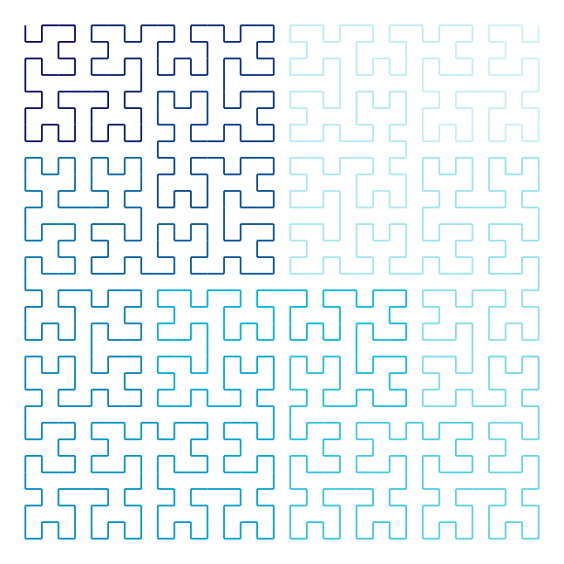
10. The Hilbert Curve
A cleaner space-filling curve than Peano's, and — unlike Peano's — one with real engineering applications.
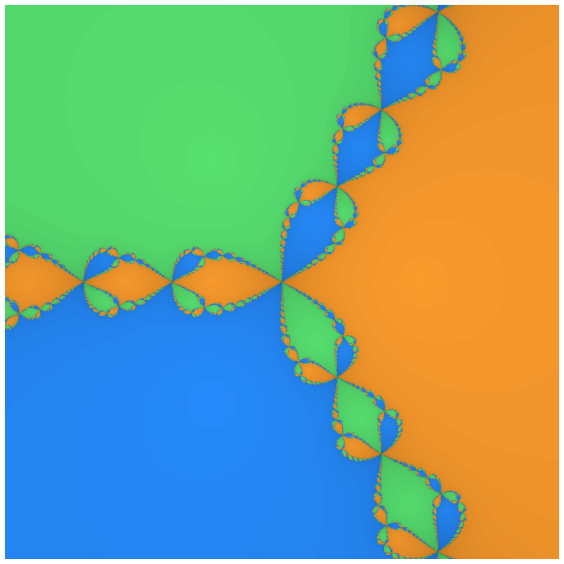
11. The Newton Fractal
A local, deterministic root-finder — yet the global picture of which root it converges to is a fractal.
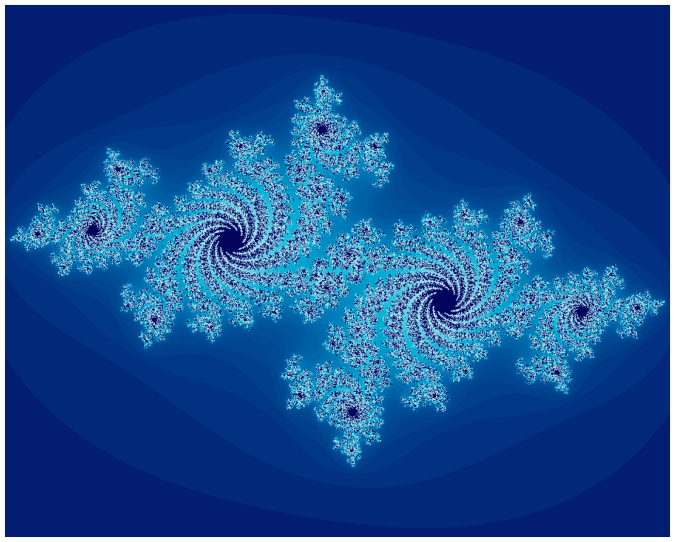
12. Julia Sets
Fix the parameter, vary the starting point — the mirror image of the Mandelbrot construction next door.
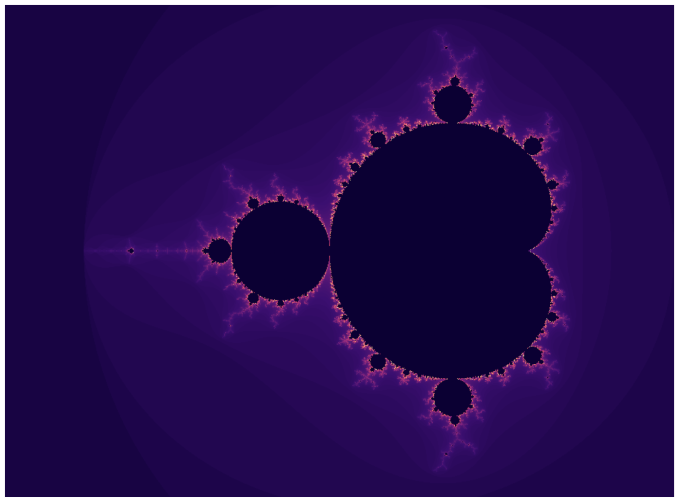
13. The Mandelbrot Set
The index of every Julia set at once — and the most recognisable image in popular mathematics.